PLATE 01
A third lineage
In 2005 the lab described Th17 cells — a lineage of effector CD4 T cells apart from the Th1 and Th2 paradigms that had held for twenty years. The finding reordered how immunologists understand inflammation.
View exhibit →University of Alabama at Birmingham · Pathology & Microbiology
An ongoing study of the CD4 T cell — how it directs defense at the body's surfaces, and how its programs turn against the tissues they protect.
Now showing
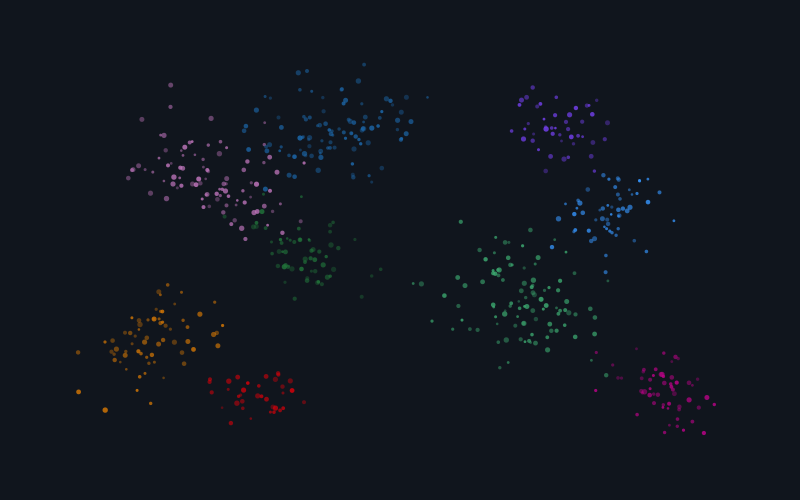
Eighty thousand cells of the infected mouse intestine, drawn from an atlas of over half a million and rendered live in your browser. Turn it in three dimensions; slice it by genotype, time, and tissue; paint it by the expression of a single gene.
The permanent collection
PLATE 01
In 2005 the lab described Th17 cells — a lineage of effector CD4 T cells apart from the Th1 and Th2 paradigms that had held for twenty years. The finding reordered how immunologists understand inflammation.
View exhibit →PLATE 02
The gut is the body's largest immune organ — a standing negotiation between tolerance and defense. We follow effector and regulatory T cells through that negotiation, in their native tissue.
View exhibit →PLATE 03
The same pathways that protect the intestine can drive inflammatory bowel disease, colorectal cancer, and neonatal sepsis. We study the turn — and where it might be reversed.
View exhibit →PLATE 04
A working scientific instrument, hung as an exhibit: the lab's single-cell atlas of the infected intestine, explorable point by point.
Enter the exhibit →Notices